Most of what I write here is about other people's marketing.
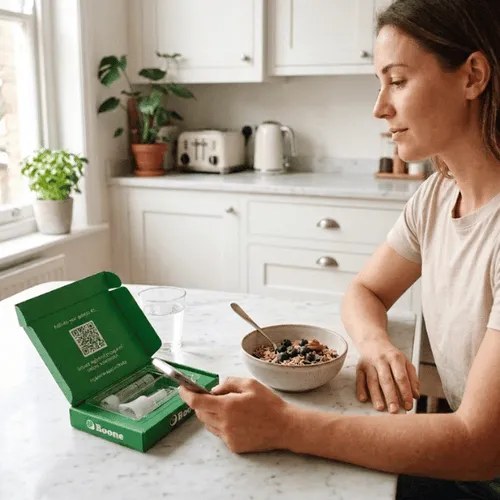
Alongside my consultancy work, I'm the founder of Boone, a UK personalised nutrition app.
It shows you what's in the food you actually eat, and how that compares with the official guidelines for your age and sex. You can add your DNA too, if you want to.
It's also the hardest marketing brief I've ever had.
Why? Because this time, the client is me.
It all started with a book
I read Ultra-Processed People and finished it understanding the problem, with nothing practical to do about it.
Sound familiar?
Food labels only get you so far.
They show total sugars, but not free sugars.
They don't tell you how processed something is.
And they certainly don't tell you whether a food suits you, rather than some imaginary average person.
The information exists, but it's stuck behind roadblocks.
Too much of the power in food sits with corporations and supermarkets. I wanted to move some of it back to the people doing the eating.
What do I actually believe?
Those four haven't changed.
So what does Boone actually do?
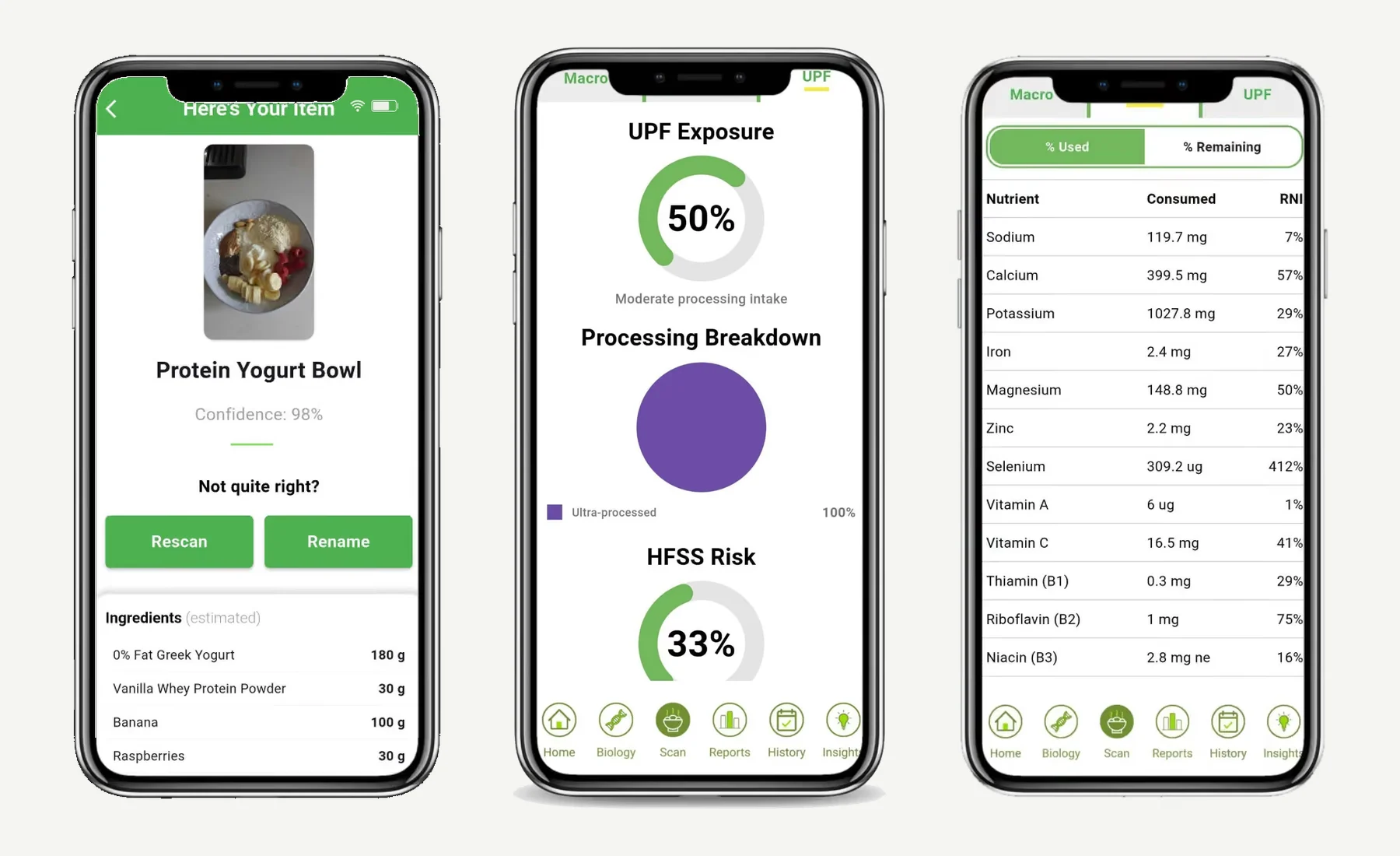
You log your food by taking a photo, typing what you ate, scanning a barcode or scanning a shop receipt.
Boone then breaks it down in real time: macros, micronutrients and an estimate of how processed it is.
Given where Boone started, that last part matters a lot to me.
Our ultra-processed food tracker uses a NOVA-based estimate.
Notice the word estimate. It isn't always certain, and I'd rather say so than pretend otherwise.
We also run a micronutrient tracker covering 29 vitamins and minerals, with targets aligned to official national guidelines across the 36 countries we support.
Over time, the insights show you patterns such as diet diversity, eating windows and which nutrients are trending up or down.
Show your working
The numbers come from established composition data, and how Boone calculates nutrition is documented publicly.
If you're selling a data product, showing your working is the most persuasive marketing there is.
What about the DNA bit?
The Boone DNA nutrition test is an optional add-on rather than the starting point.
I'll come back to why.
Who's it for?
You know I'm going to say you can't speak to everyone.
Boone is built around three kinds of people:
That's why we're building partnerships with gyms and sports clubs. They have the physical locations and the communities that a small app company doesn't.
Who isn't it for?
This matters just as much.
Boone isn't for people with medical problems, or people who want to be told what to eat. Weight can be tracked, but we don't talk about it or promote it.
There are also two lines we won't cross:
Don't want the app? Use the data anyway
Not everybody wants to download something.
So we also publish a food database where anyone can look up foods, brands and restaurant meals.
You've heard this one from me before. Give people something useful first, then let them decide whether they want more.
The research behind it
Ultra-processed food is a noisy subject, and I didn't want Boone to be just another opinion on it.
I co-author academic work on machine learning classification of ultra-processed foods with researchers at the University of East Anglia, including a paper published in the HAIS 2026 conference proceedings.
Yes, a marketer. Stay with me.
You can read more about that, and the rest of my nutrition work, on my founder profile at Boone.
Four things building Boone has taught me
I've spent years telling clients what to do.
Doing it for my own company has been humbling.
1. Your product and brand are always developing
When you're creating something from scratch, you have the destination, but no clue about the journey.
We've done so much in product development, and it took way longer than expected for it all to start coming together.
Boone began as a DNA test kit business. The app came later, and it's now the core of the product. The website kept talking about the DNA test after the company had moved on.
If your business has changed, check that your marketing has noticed.
2. You'll come across different kinds of people
The people who show real interest are never the people you expect.
3. Most people need to see it 90% done
A lot of people essentially need a product that's 90% done before they'll cross the line.
Our early gym pitches drew strong interest, then stalled at the demo because the product wasn't far enough along.
A lot of people are also visual and led by marketing, which means design and UX are critical skills.
In many ways, the form is more important than the function.
So you get to a point and learn. Then you get to the next point and learn again.
This is true across all areas:
They're all essentially the same process.
4. Not all advice is equal
There's a lot of advice out there, and much of it falls into one of three camps:
It's really hard to work out which is which.
The off-hand comments are usually more important than the main points people are making.
Fancy trying it?
If you're curious, you can download the Boone app and start logging.
If you run a gym or sports club, I'd love to hear from you.
And if you're a small business wrestling with the same questions, I'm still happy to talk those through too.